
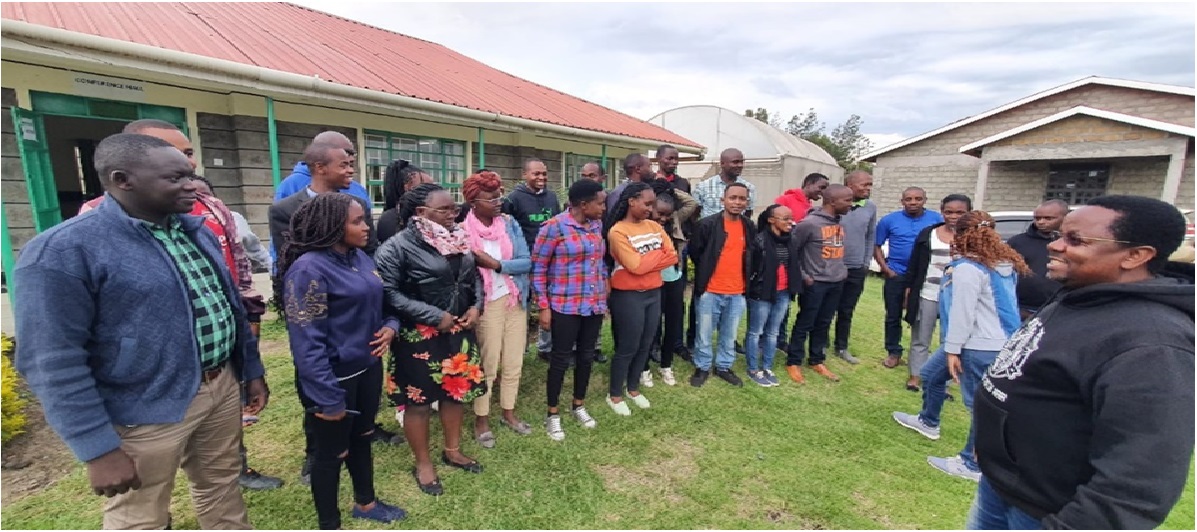
Tegemeo Institute undertakes the 2022 Annual Outcome Evaluation of Farm to Market Alliance operations in Kenya

Tegemeo Institute undertakes the 2022 Annual Outcome Evaluation of Farm to Market Alliance operations in Kenya

  • Print
  • Email
Egerton University

The value of rigorous evidence for effective development programming

The value of rigorous evidence for effective development programming

  • Print
  • Email

                    feed the future innovation lab youtube clip 

 Maximizing impact is not just about investing resources—it’s about investing wisely. This compelling discussion brings together leading voices in development and innovation to explore how evidence-based approaches can transform well-intentioned efforts into real-world success stories.

 Alexander Pfaff of Duke University highlights the need to critically evaluate what works and what does not to ensure that resources are directed toward strategies with proven impact. He underscores the need for humility within public institutions to allow for learning about what works and what does not.

 Mercy Kamau, a Senior Research Fellow and a development evaluation expert from Tegemeo Institute, brings focus  to agriculture, emphasizing rigorous impact evaluations to ensure public spending delivers measurable benefits, citing investments in fertilizer subsidy and irrigation as examples where rigorous impact evaluation would provide evidence to support decisions to either 'STOP or Go'.

Tara Chiu of the Feed the Future Innovation Lab for Markets, Risk and Resillience advocates building on existing evidence rather than starting from scratch. She emphasizes on the importance of cost-effective programs grounded in what works while continuously measuring and refining strategies for greater impacts.

The experts call for a shift towards smarter, evidence-driven decision making, one that turns innovation into powerful tools for positive change.

                                Watch this clip above to learn how we can make every investment count.


Tegemeo Institute Food Security Impact Assessment Impact Studies

USAID Funds Research on Soil Management to Boost Smallholder Farmer Yields

  • Print
  • Email

August 19, 2021—High soil acidity contributes to low and stagnant agricultural productivity. This is particularly true for maize, which is the country’s main staple crop.


  • Start
  • 1
  • 2
  • Home
  • Explore
    • About Us
      • Our Profile
      • Our Purpose
      • Our Achievements
      • Our Team
      • Partners and collaborations
      • Careers and Advertisements
    • Media, News & Events
      • Latest News
      • Events
      • Tegemeo in the Media
      • Press Releases
      • Photo Gallery
      • Video Gallery
  • Research
    • Research Topics
      • Poverty
      • Food Security
      • Gender
      • Climate Change
      • Impact Assessment
      • Agricultural Commodity Value Chains
      • Input use, agricultural productivity, commercialization and output markets
    • Research Projects
      • TAPRA II
      • ISSD Programme
      • ELLA
      • MLE Unit
      • 3ie Project
      • FTF ALL-IN Project
    • Research Themes
      • Policy Research
      • Monitoring Trends & Patterns
      • Outreach and Advocacy
      • Capacity Building
  • Publications
    • Working Papers
    • Policy Briefs
    • Journal Articles
    • Technical Reports
    • Technical Bulletins
    • Other Papers
  • Info
    • Data
    • Infographics
    • Covid-19 News
  • Outreach
    • Breakfast Forums
    • Conferences
    • Workshops
    • Media Briefings
  • Contacts